|
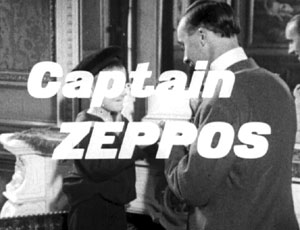 Currently, little is known about the English language soundtrack to the BBC version of Kapitein Zeppos. Other series at the
time were re-dubbed, supervised by the BBC's Peggy Miller at De Lane Lea Studios in London.
These included the popular BBC strand, Tales from Europe. This series sourced children's fairy tales and traditional
stories from European broadcasters, with Miller adding English language soundtracks to make them accessible to British
family audiences. For Tales of Europe, the redubbing almost always retained the original language soundtrack, with an
English narration over the top of it, explaining the proceedings and translating the dialogue (which could still be heard in
the original language beneath the narration). Other imported European serials received a more complete soundtrack recreation
(which were recorded in the same way as radio plays, complete with sound effects, etc), such as The Adventures of Robinson
Crusoe, The Flashing Blade (originally Le Chévalier Tempête, from France) and Belle and Sebastièn
(another popular French series). These series featured minimal narration with a cast of actors instead overdubbing the original
actors' speech. (These series were not shown under the Tales from Europe banner.) Currently, little is known about the English language soundtrack to the BBC version of Kapitein Zeppos. Other series at the
time were re-dubbed, supervised by the BBC's Peggy Miller at De Lane Lea Studios in London.
These included the popular BBC strand, Tales from Europe. This series sourced children's fairy tales and traditional
stories from European broadcasters, with Miller adding English language soundtracks to make them accessible to British
family audiences. For Tales of Europe, the redubbing almost always retained the original language soundtrack, with an
English narration over the top of it, explaining the proceedings and translating the dialogue (which could still be heard in
the original language beneath the narration). Other imported European serials received a more complete soundtrack recreation
(which were recorded in the same way as radio plays, complete with sound effects, etc), such as The Adventures of Robinson
Crusoe, The Flashing Blade (originally Le Chévalier Tempête, from France) and Belle and Sebastièn
(another popular French series). These series featured minimal narration with a cast of actors instead overdubbing the original
actors' speech. (These series were not shown under the Tales from Europe banner.)
 It is known that the latter style of over-dub was chosen for Captain Zeppos, with a new soundtrack being made from scratch.
A translation was made from the original series, resulting in a
voice-over script for the new version. Voice
artistes were chosen, probably from the small pool of actors who
tended to work on these serials. Short clips of the English version have
appeared on the second Kapitein Zeppos DVD set, released in October 2004 in Belgium. These have provided a brief but
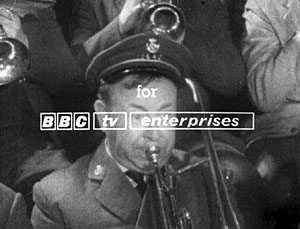
invaluable insight into the British version. The titlecards from the BBC version are shown on this page, and purists will be
pleased to note that it appears that Bert Kaempfert's Living It Up was utilised on the English language version. Frankly,
the series wouldn't have been the same without it. It is known that the latter style of over-dub was chosen for Captain Zeppos, with a new soundtrack being made from scratch.
A translation was made from the original series, resulting in a
voice-over script for the new version. Voice
artistes were chosen, probably from the small pool of actors who
tended to work on these serials. Short clips of the English version have
appeared on the second Kapitein Zeppos DVD set, released in October 2004 in Belgium. These have provided a brief but
invaluable insight into the British version. The titlecards from the BBC version are shown on this page, and purists will be
pleased to note that it appears that Bert Kaempfert's Living It Up was utilised on the English language version. Frankly,
the series wouldn't have been the same without it.
Voice casting of the central characters does not seem to have been a great success, in all honesty. The actor voicing Zeppos
is passable, not that close to Senne Rouffaer's original voice, but of a similar age as Rouffaer. Unfortunately, in the case
of the voice of Ben Kurrel, the voice artiste chosen sounds both too young and too upper-class English. The voice sticks out
like a sore thumb. Quite a pity.
Regardless, the series was enough of a success in Britain to lead to the publication of a translation of Louis de Groof's
novel. Sadly, neither De Eglantier or Tweng were made into English editions - more than likely an upshot of the BBC's move
to colour at the time the serials would have become available. Series producer, Rik Van den Abbeele was, however, very proud of
the fact that the first series was translated into English by the BBC. "The broadcast by the BBC was a tremendous compliment;
the BBC is still the nourishing mother of all television," he said when interviewed on the subject recently.
|